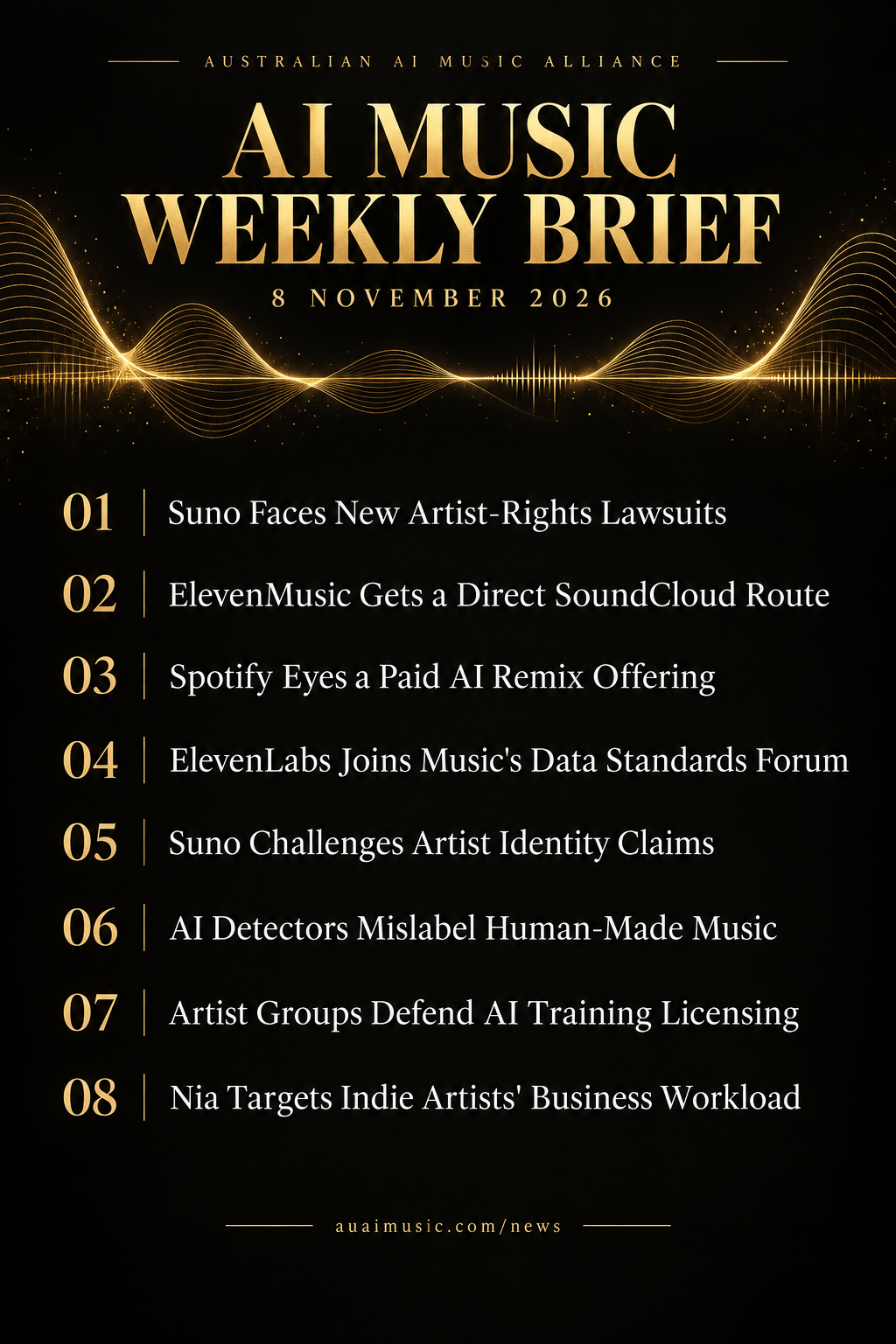
1. Elvis Rightsholders and Eminem Publisher Sue Suno
Elvis Presley music rightsholders and Eminem publisher Eight Mile Style filed separate federal lawsuits against Suno. The Presley group's 51-page complaint alleges copyright infringement and unauthorized exploitation of his identity, invoking Tennessee's 2024 ELVIS Act over generated vocals allegedly resembling his voice. Eight Mile Style alleges that generated songs and lyrics replicate Eminem's work; the rapper is not personally participating. Suno says it prohibits unauthorized uses, blocks artist-name and song prompts, and screens uploads through third-party providers. The cases add pressure on AI music platforms over both copyright and the protection of artists' identities, including whether existing safeguards prevent misuse.
Source: variety.com (2026-11-07)
2. SoundCloud Opens Direct Publishing from ElevenMusic
SoundCloud has partnered with ElevenLabs' ElevenMusic service to let users publish tracks directly to its platform. Music distributed through the integration will carry disclosures of its origins and remain subject to SoundCloud's existing content policies, including ownership and rights requirements. CEO Eliah Seton framed the partnership around artist experimentation and audience development. The announcement comes as rightsholders urge streaming services to limit recommendations, monetization or availability of AI-generated music. ElevenLabs also became DDEX's first full AI-company member. The integration expands distribution for AI music while putting artist trust, rights compliance and disclosure practices in focus.
Source: musically.com (2026-11-06)
3. Spotify Reportedly Targets Early 2027 AI Remix Launch
Spotify is reportedly preparing to launch an AI cover and remix tool in early 2027, potentially charging US Premium subscribers an additional $4–$5 per month. The timetable and pricing come from a Financial Times report citing anonymous sources and remain unconfirmed. Universal Music, Believe/TuneCore, Kobalt and Merlin have signed related licensing deals, while participating artists and other product details remain scarce. Spotify has previously said a full catalog is unnecessary for launch. The proposed offering would add a paid, authorized AI creation option within streaming, competing with other licensed services and potentially helping artists introduce catalogs to new audiences.
Source: digitalmusicnews.com (2026-10-30)
4. ElevenLabs Becomes DDEX's First AI Company Member
ElevenLabs has joined Digital Data Exchange, or DDEX, as a full member, becoming the first AI company to do so. The nonprofit standards organization has more than 150 members across music and technology and develops standards for exchanging industry data. ElevenLabs plans to participate in plenaries and working groups addressing music communication, including AI-related issues. DDEX says the company will contribute technical insight while gaining a deeper understanding of music-industry operational requirements. Membership provides a voice in developing standards, although companies can implement them without joining. The move brings an AI developer into the industry's shared data-standard-setting process.
Source: digitalmusicnews.com (2026-11-06)
5. Suno Seeks Dismissal of Artist Identity Lawsuit
Suno has moved to dismiss privacy and publicity-rights claims brought by musicians including Jason Isbell and David Lowery. The company argues that artist names function as shorthand for musical styles, that such references are protected by the First Amendment, and that US copyright law does not protect general styles or genres. It also claims its outputs could not be mistaken for the plaintiffs. The musicians allege that users can bypass restrictions to replicate their identities. Although Suno translates direct artist-name prompts into descriptive tags, the dispute tests where stylistic reference ends and unauthorized commercial exploitation of an artist's identity begins.
Source: digitalmusicnews.com (2026-11-04)
6. AI Music Detectors Flag Human-Made Synth Recordings
Testing reported by International Artist Marketing highlights false positives in AI music detection, particularly for synth-heavy genres. Musician André Grafert's handmade, 23-track tribute album to Twice a Man was flagged throughout by SubmitHub as potentially AI-generated, with other detectors predominantly reaching similar conclusions. Tests also flagged seven original Twice a Man recordings from four decades ago; two were attributed to specific AI platforms. The findings raise concerns about treating statistical scores as evidence of misconduct. For independent musicians, inaccurate classifications can threaten reputation and access to distribution or royalties, underscoring the importance of reliable labeling and clear appeals procedures.
Source: digitalmusicnews.com (2026-11-05)
7. Artist Groups Back Licensing in New York Times AI Case
The Human Consent Foundation, Music Artists Coalition and other advocacy groups filed a 31-page amicus brief supporting The New York Times in its lawsuit against OpenAI and Microsoft. The filing challenges arguments that clearing rights for AI training is prohibitively costly or lacks established valuation methods, pointing to existing creative-industry licensing infrastructure. The foundation emphasizes creators' ability to choose whether to participate in AI licensing markets. Other briefs, including one from the US government, support fair-use arguments. For music rightsholders, the dispute concerns whether established permission and licensing systems should govern AI training rather than be bypassed.
Source: digitalmusicnews.com (2026-11-02)
8. Mashup Edu Plans Nia AI Agent for Indie Music Business
Indian creator-development platform Mashup Edu is launching Nia, an AI agent designed to handle independent musicians' business operations. Planned tasks include collecting cross-platform streaming data, drafting personalized venue pitches and tracking response windows. Its execution logic draws on three years of operational data involving 87 creators and playbooks from 226 masterclasses across seven Xcelerator cohorts. An Indian beta is scheduled for early 2027, with likely pricing around $20 per month and global availability planned later that year. Rather than generating music, Nia targets fragmented administrative work, aiming to provide support otherwise associated with managers or industry connections.